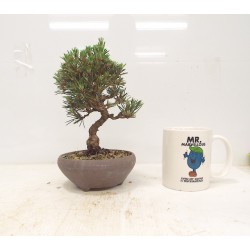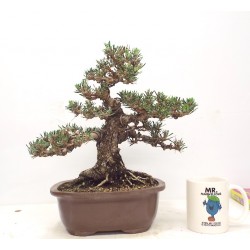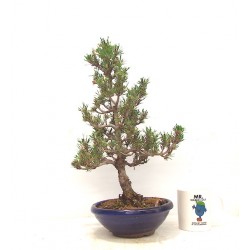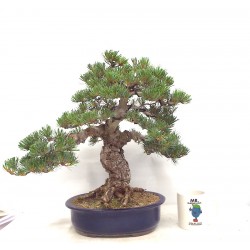
Key Characteristics
1. Needles
Shorter than typical Japanese white pine varieties
Blue-green to silvery green color
Grow in bundles of five needles per cluster
2. Growth Habit
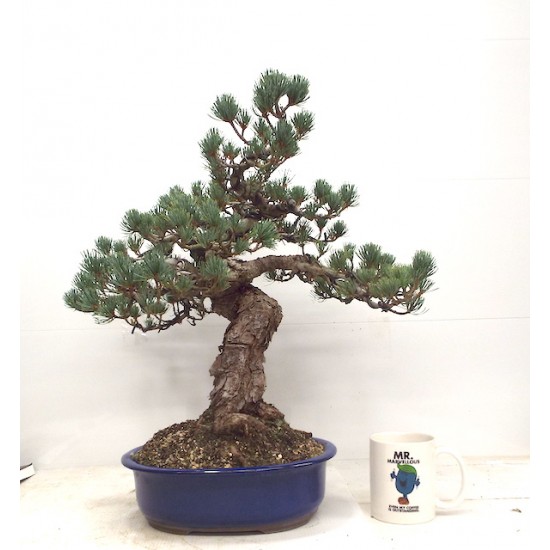
Compact and dense branching, ideal for bonsai
Responds well to pruning and wiring
Naturally forms refined foliage pads
3. Bark and Trunk
Develops attractive plated bark as it ages
Trunks often appear old and rugged, which enhances bonsai aesthetics
4. Cones
Small decorative cones may appear on mature trees
Often purple-tinged when young
Why It Is Popular in Bonsai
The Miyajima variety is prized because it:
Produces fine, proportionate foliage suited to small trees
Develops ramification (fine branching) easily
Maintains balanced growth compared to many white pines
Because of these traits, it is commonly used for refined bonsai styles such as:
Formal Upright (Chokkan)
Informal Upright (Moyogi)
Slanting (Shakan)
Cultivation Notes
Growers often graft Miyajima white pine onto the rootstock of Pinus thunbergii.
This improves:
Root strength
Disease resistance
Growth vigor
Reputation Among Collectors
Miyajima white pine bonsai are considered high-quality and collectible, especially specimens produced by professional nurseries in Takamatsu, a major bonsai-growing region.